Managing procurement in educational institutions, especially charter schools and school districts, brings specific operational demands: budget accountability for taxpayer funds, strict compliance requirements, and the need to serve educational goals efficiently. For many school business managers, outdated purchasing systems consume valuable time and resources better spent on educational outcomes.
The data speaks for itself: School administrative staff spend an average of 15-20 hours weekly on procurement tasks. Meanwhile, teachers spend hundreds of dollars annually from their own pockets simply because requisition processes are too cumbersome.
This guide provides actionable strategies to optimize your school’s procurement operation from a time-consuming administrative burden into an efficient process that drives cost savings for your school. We’ll focus on practical solutions that work specifically in educational environments, where budget cycles, compliance requirements, and stakeholder needs differ significantly from corporate settings.
ProcureDesk is built specifically for educational procurement, helping schools streamline approvals, track budgets in real-time, and integrate with your existing systems. See how it works for schools or schedule a quick demo with our education specialist.
Why Change is Necessary in K-12 School Procurement Strategy
School procurement is unlike procurement in most other industries. Consider these scenarios:
- A science teacher needs specialized lab equipment but can’t get approval in time for an upcoming experiment
- Your accounting team spends hours manually reconciling invoices with purchase orders
- Budget holders have limited visibility into their remaining funds
- Staff make emergency purchases using personal funds and wait weeks for reimbursement
These situations aren’t just inconvenient—they have real consequences for educational outcomes. When teachers can’t access needed supplies in a timely manner, student learning suffers. When administrators spend excessive time on paperwork, they have less time for strategic initiatives.
The True Cost of Inefficient Procurement in Schools
The impact of outdated procurement processes extends beyond mere frustration:
- Wasted Educational Resources: Teachers spend an average of $479 of their own money on classroom supplies annually
- Administrative Burden: School business managers spend up to 15-20 hours per week on procurement-related tasks
- Budget Uncertainties: Without real-time visibility, schools often exceed departmental budgets or underspend in critical areas
- Compliance Risks: Manual processes increase the likelihood of policy violations and audit findings
Free Assessment: Evaluate Your School’s Procurement Maturity
Not sure where your institution stands? Take our 5-minute procurement process assessment to identify your biggest opportunity areas and receive a customized improvement roadmap specific to educational institutions.
Key Strategies for Streamlining School Procurement
With your foundation in place, it’s time to implement specific strategies for improvement.
1. Digital Transformation: Selecting the Right Procurement Technology for School Procurement
When evaluating e-procurement platforms for educational institutions, consider specific features and the unique needs of the education sector:
Key Technology Features to Evaluate
- User-friendly interface designed for occasional users (like teachers who may only make requests seasonally)
- Role-based access controls to accommodate district hierarchies and department-specific budgets
- Flexible approval workflows that reflect both budget authority and departmental oversight
- Multi-source catalog management supporting both educational suppliers and general vendors
- Grant and fund management capabilities to track restricted funding sources
- Compatibility with education-specific accounting codes and budget categories
- Reporting that aligns with school fiscal year requirements and board presentation needs
- Mobile accessibility for staff working across multiple school buildings
ProcureDesk’s School-Specific Solution includes:
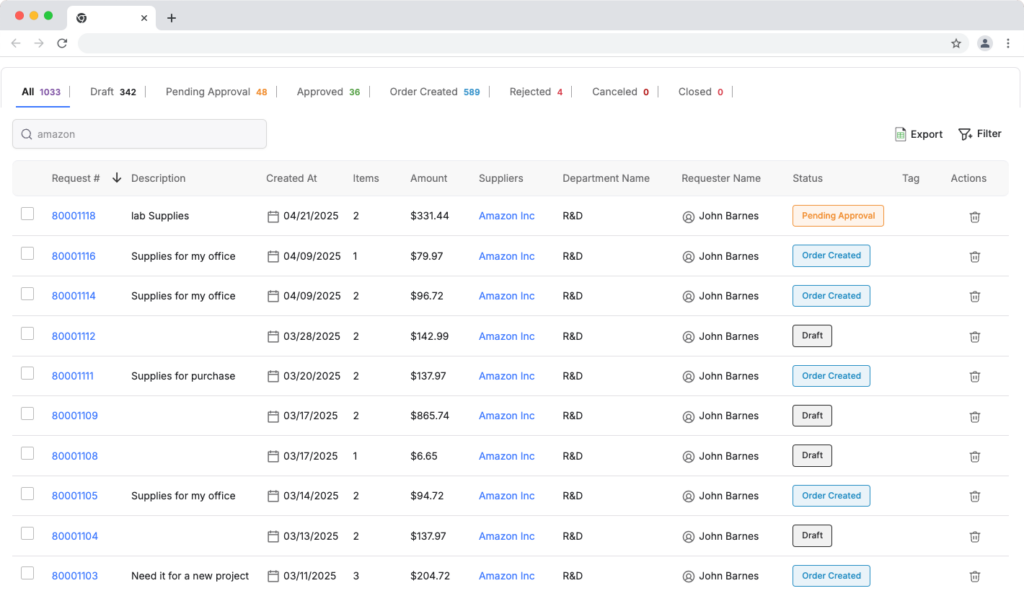
- A complete solution to automate all your procurement activities including purchase requisitions, budget allocation, approvals, accounts payable and dashboard for spend visibility.
- Digitized requisitions with user-friendly interfaces designed specifically for educational environments
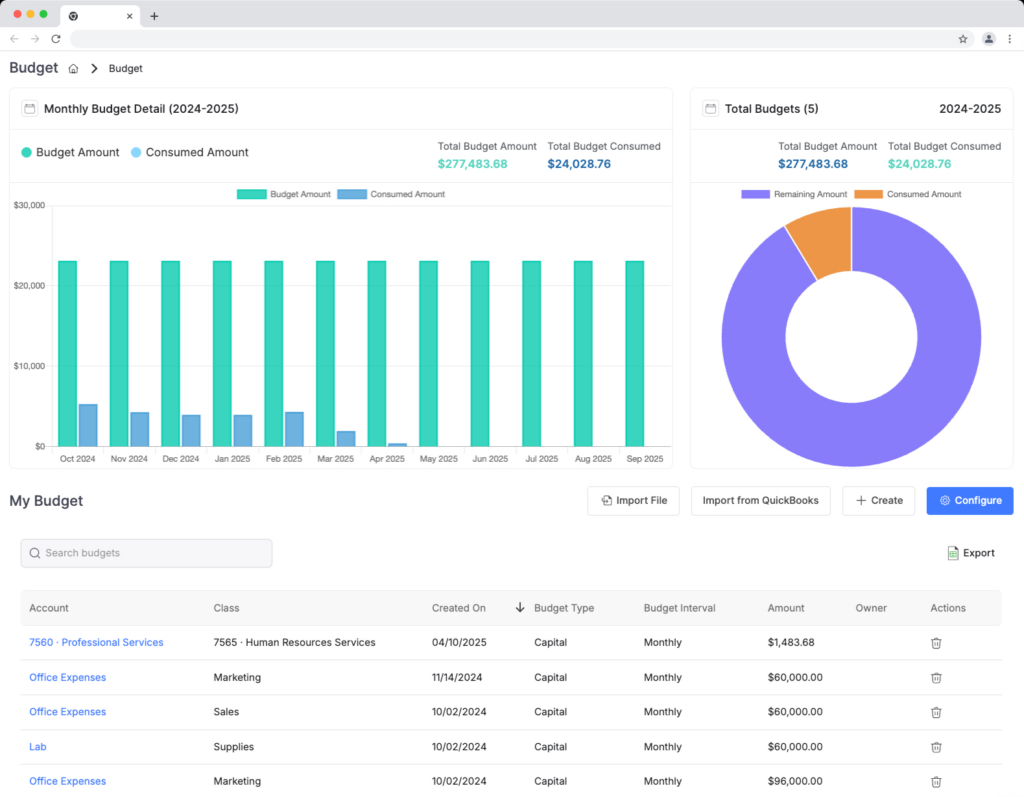
- Real-time budget tracking by department, project, or program
- Automated three-way matching to verify purchase orders, receipts, and invoices
- Direct punchout catalog connections to educational suppliers
- Custom approval workflows that reflect school hierarchies
- Integration with popular school accounting systems
Here is a sample dashboard to track your purchase in one place:
Implementation Considerations for Schools
- Prioritize ease of adoption with minimal training requirements for faculty
- Plan implementation timing around school year cycles, not calendar years
- Allocate adequate IT resources for initial setup and integration
- Consider phased rollouts by department to minimize disruption
- Develop clear change management strategies tailored to educational stakeholders
2. Optimizing Internal Processes
Digital tools are only effective when supported by well-designed processes. Start by documenting your current procurement process and how it compares with best-in-class procurement practices:
Standardization and Templates
- Develop standardized requisition forms for different purchase types that match your specific needs
- Create templates for commonly ordered items
- Establish clear documentation requirements for different spending thresholds
Streamlined Approval Workflows
- Implement approval thresholds to eliminate unnecessary reviews and increase operational efficiency
- Create parallel approval paths when multiple departments need to sign off
- Set up automatic escalations for time-sensitive requests
Clear Roles and Responsibilities
- Define who can initiate requests for different purchase types
- Clarify approval authority at each organizational level
- Establish a clear escalation path for exceptions
3. Strategic Supplier Management
Schools often leave money on the table by not managing supplier relationships effectively:
Preferred Vendor Programs
- Identify core suppliers for frequent purchases
- Negotiate volume discounts and educational pricing
- Establish catalog punchouts for easy ordering
Vendor Performance Evaluation
- Track delivery times and order accuracy
- Document quality issues and resolution
- Regularly review pricing competitiveness
Contract Management
- Centralize contract storage and accessibility
- Set up automatic renewal notifications
- Track compliance with negotiated terms
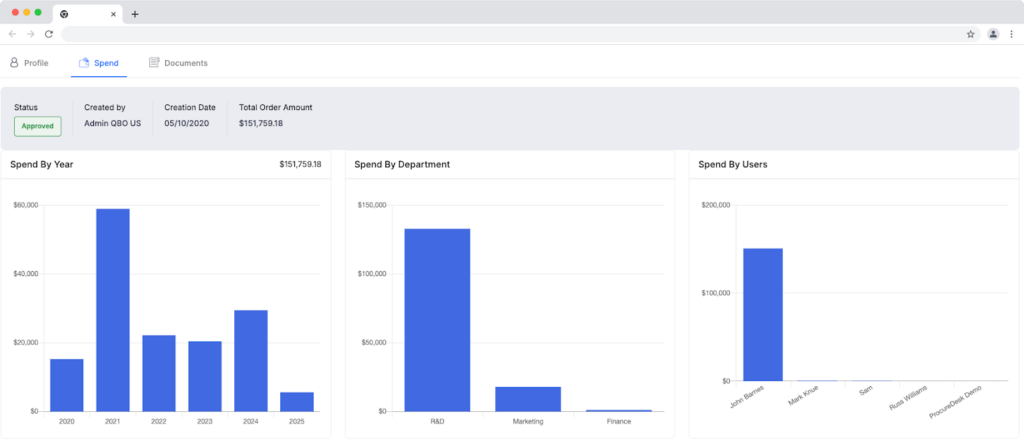
Here is a high-level vendor dashboard:
4. Aligning Procurement with School Budget Cycles
Educational institutions operate on fiscal calendars that differ from the calendar year. Streamlining procurement requires alignment with these unique budget cycles:
Understanding the School Budget Timeline
- Annual Planning Phase (typically January-March): When next fiscal year’s budgets are developed and procurement needs forecast
- Budget Finalization (typically April-June): When departmental allocations are solidified and procurement plans finalized
- Beginning-of-Year Purchases (typically July-September): When bulk school-year supplies and equipment are purchased
- Mid-Year Reviews (typically December-January): When budgets are reassessed and adjustments made
- Year-End Spending (typically May-June): When remaining budget funds must be allocated or committed
Budget Integration Strategies for School Procurement
- Configure procurement software to reflect your school’s exact fiscal year calendar
- Set up automated notifications for budget holders at key points in the cycle
- Implement encumbrance accounting to track committed but unspent funds
- Create purchase category codes that align with educational budget categories
- Develop reporting templates for school board and administrative reviews
- Configure multi-year tracking for grant-funded purchases that span fiscal years
Real-Time Budget Visibility and Controls
- Provide department heads with dashboard views of real-time budget status
- Set up automated alerts when spending approaches predetermined thresholds
- Implement pre-purchase budget checks that prevent over-spending
- Deploy mobile access for on-the-go budget review and approval
Year-End Procurement Management
- Establish clear cutoff dates for different purchase types as the fiscal year-end approaches
- Automate the tracking of encumbered funds that will cross fiscal years
- Create simplified reporting for year-end budget reconciliation
- Implement tools to track multi-year contracts and recurring purchases
School in the Square, a charter school in New York City, implemented ProcureDesk to gain accurate, real-time budget visibility that wasn’t possible with their previous spreadsheet-based system. According to their leadership team, the system now allows them to “prevent overspending and makes it much easier to make informed budgetary decisions in the moment.”
5. Strategic Sourcing and Competitive Pricing
Effective procurement isn’t just about process efficiency—it’s about maximizing the educational impact of every dollar spent. Schools have unique opportunities to leverage collective purchasing power and strategic sourcing:
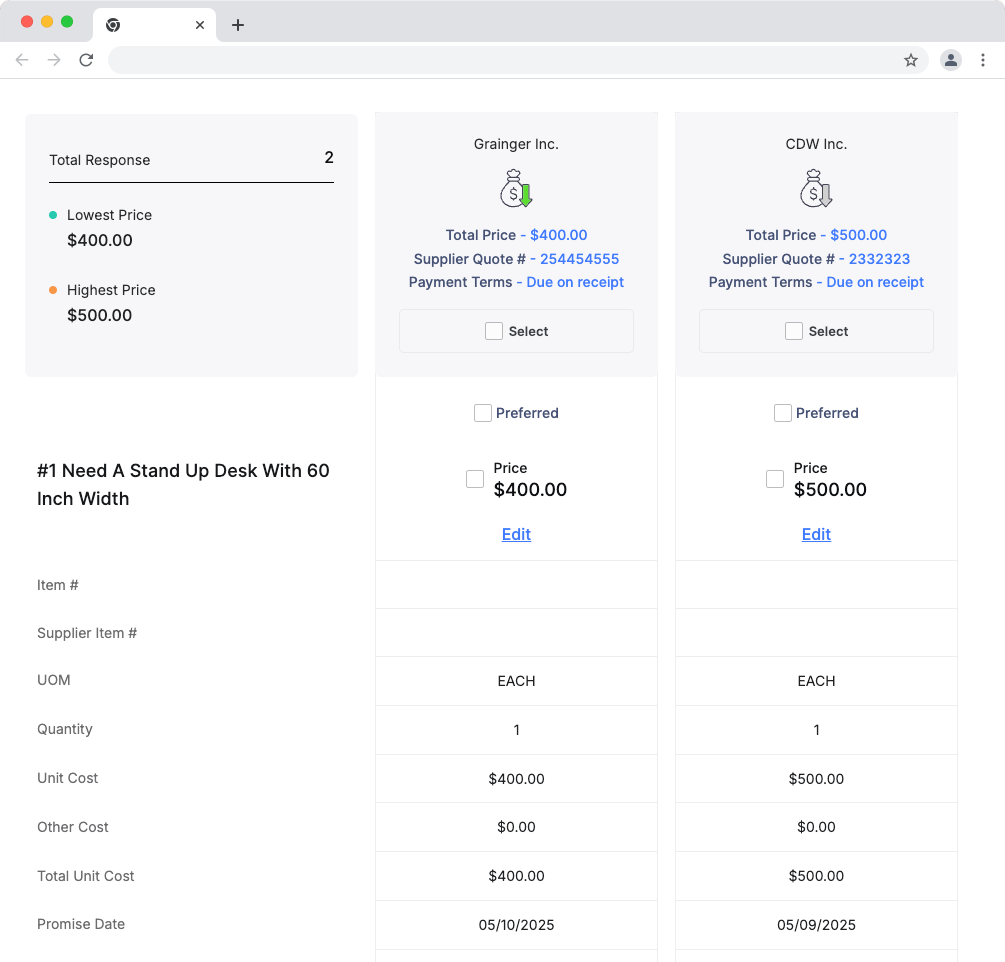
Streamlined RFP and Quote Management
- Automated RFP Workflows: Digitize the entire request for proposal process, from creation to vendor selection
- Centralized Quote Management: Store and compare vendor quotes in a single system rather than scattered emails
- Standardized Evaluation Criteria: Implement consistent scoring for vendor proposals to ensure objective decisions
- Compliance Documentation: Automatically maintain records required for audit and transparency requirements
Leveraging Cooperative Purchasing Power
- Group Purchasing Organization (GPO) Integration: Connect with educational consortiums and purchasing cooperatives to access pre-negotiated pricing. If you are not in a position to negotiate better pricing, you can leverage the buying power of other schools’ partnerships.
- Contract Repository: Maintain digital access to all negotiated pricing agreements
- Volume Discount Tracking: Monitor purchases to identify opportunities for additional volume-based savings
- Cross-District Collaboration: Share vendor performance data with other districts to strengthen negotiating positions
ProcureDesk’s Strategic Purchasing Capabilities
- Support for both formal RFP processes and simplified quote collection for smaller purchases
- Ability to store and apply GPO and cooperative purchasing contract pricing
- Automated competitive bidding to help you identify cost-effective solutions to your purchasing needs
- Vendor performance tracking to inform future sourcing decisions
- Simplified vendor onboarding to expand your supplier base
- Category-specific approval workflows to ensure specialized review of certain purchases
6. Effective Spend Management and Analysis
Maximizing educational impact requires not just efficient procurement processes but also strategic spend management. Schools need clear visibility into spending patterns to identify savings opportunities and optimize resource allocation.
Comprehensive Spend Visibility
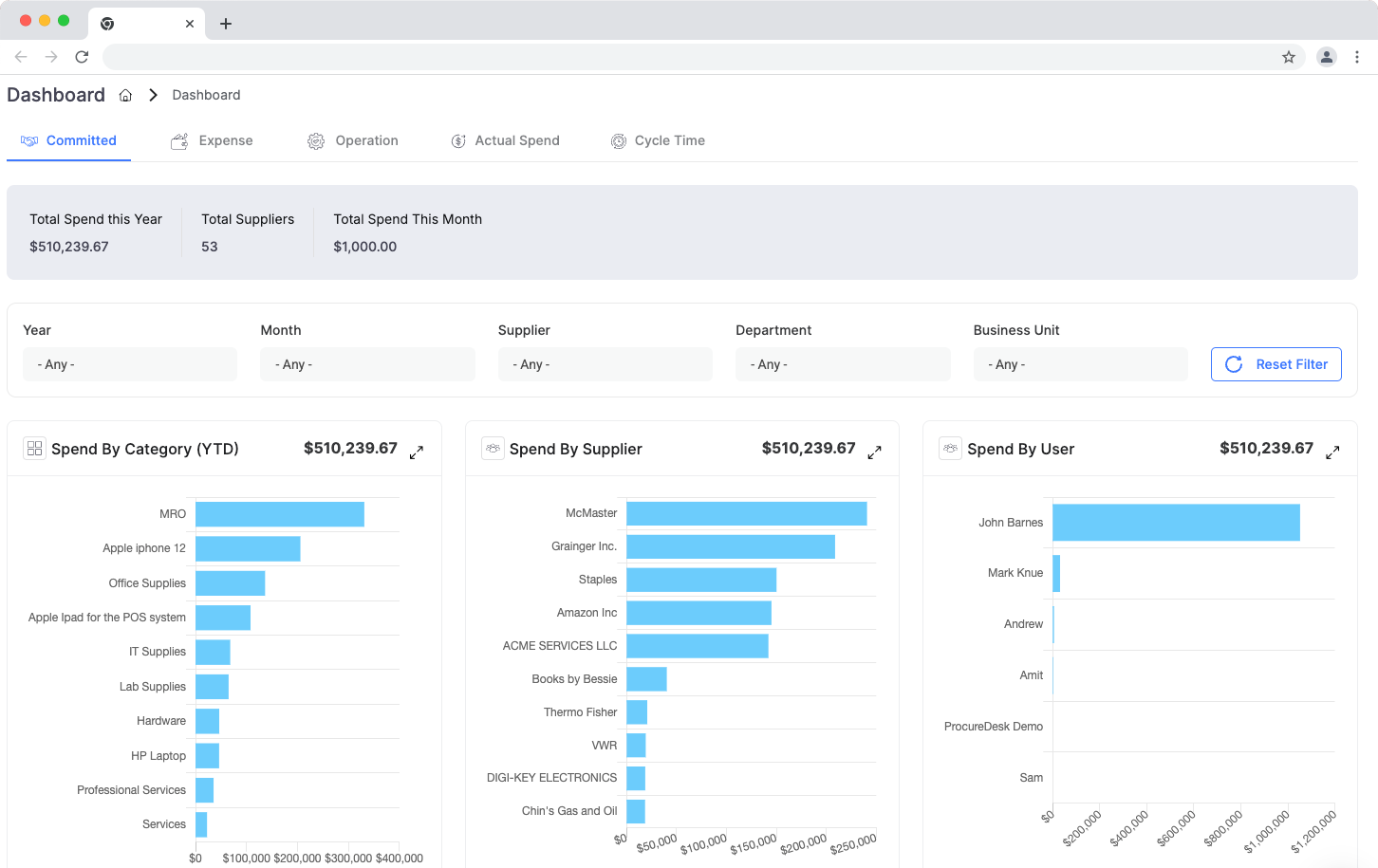
- Centralized Spend Dashboard: Create a single view of all school or district spending across departments and funding sources
- Category-Based Reporting: Analyze spending by educational purpose (curriculum, technology, facilities) rather than just vendor or account code
- User-Friendly Data Visualization: Transform complex spending data into intuitive charts and graphs for stakeholders at all levels
Identifying Cost Reduction Opportunities
- Vendor Consolidation Analysis: Helping procurement teams identify fragmented spending across multiple vendors providing similar products
- Price Variance Reporting: Flag inconsistent pricing for identical items across departments or schools
- Seasonal Spending Patterns: Analyze the timing of purchases to optimize bulk buying opportunities and make better purchasing decisions
- Recurring Purchase Identification: Highlight opportunities to convert repeated ad-hoc purchases into contracted agreements
ProcureDesk’s Spend Management Capabilities
- Real-time dashboard with drill-down capabilities to transaction-level detail
- Educational-specific spend categories and reporting templates
- Automated anomaly detection to flag unusual spending patterns
- Integration with budget systems for side-by-side analysis of planned vs. actual spending
- Shareable reports for stakeholder reviews and board presentations that drive informed decision-making.
Implementation Best Practices
- Begin with high-impact spending categories like classroom supplies, technology, and facilities
- Involve curriculum leaders in defining meaningful educational spending categories
- Schedule regular spend review sessions with department heads
- Use insights to inform the next budget planning cycle
- Document and share savings achievements to build momentum
7. Change Management and Training
The human side of procurement transformation is often the most challenging:
Comprehensive Training Programs
- Provide role-specific training sessions
- Create self-service resources like video tutorials
- Offer refresher training at regular intervals
Champions Program
- Identify early adopters to help promote the new system
- Train “super users” to provide peer support
- Recognize and reward those who embrace the change
Continuous Communication
- Share success stories and wins from the new process
- Provide regular updates on implementation progress
- Create forums for feedback and improvement suggestions
Laying the Foundation for Streamlined Procurement Process
Before implementing new tools or processes, it’s essential to establish a solid foundation for change.
Step 1: Stakeholder Identification and Communication
Start by identifying everyone involved in the procurement process:
- Teachers and Department Heads who initiate purchase requests for expenditure
- Administrative Staff who process requisitions
- Budget Managers who approve spending
- Accounts Payable Personnel who handle vendor payments
- IT Department for technology integration
- School Leadership for policy decisions
Once you’ve identified your stakeholders, create a communication plan that addresses:
- Why changes are needed
- How the new process will benefit each group
- Timeline for implementation
- Training opportunities
- Feedback mechanisms
Step 2: Process Mapping and Analysis
Document your current procurement workflow from initial request to payment. This exercise often reveals surprising inefficiencies:
- Identify Process Steps: List every action in the current procurement cycle
- Document Handoff Points: Note where responsibility transfers between stakeholders
- Calculate Time Investments: How long does each step typically take?
- Pinpoint Bottlenecks: Where do delays commonly occur?
- Recognize Pain Points: Which aspects frustrate users most?
Step 3: Define Clear Goals and Objectives
Establish SMART goals for your procurement transformation:
- Specific: “Reduce requisition-to-order cycle time from 14 days to 3 days”
- Measurable: “Decrease invoice processing costs by 35%”
- Achievable: “Implement digital approval workflows for all purchases over $500”
- Relevant: “Increase teacher satisfaction with procurement process by 50%”
- Time-bound: “Complete full implementation by the start of next school year”
Measuring Success and Ensuring Continuous Improvement
Implementation is just the beginning. To sustain success, establish metrics and review processes:
Key Performance Indicators
Track metrics such as:
- Average time from requisition to purchase order
- Percentage of spend under management
- Cost per purchase order
- Budget compliance rate
- Supplier performance
- User satisfaction scores
Regular Process Reviews
Schedule quarterly reviews to:
- Analyze KPI trends
- Identify new improvement opportunities
- Address emerging challenges
- Update processes based on feedback
- Recognize successful adoption
Feedback Collection
Create multiple channels for stakeholder input:
- Brief surveys after completing transactions
- Focus groups with different user types
- Open suggestion channels
- One-on-one check-ins with key stakeholders
Real-World Case Study: How Schools Have Transformed Procurement
Case Example: Streamlining Science Department Purchasing
A high school science department transformed their procurement process with remarkable results:
Before: Teachers submitted paper requisition forms to department heads, who manually approved and submitted them to the business office. Purchase orders were created in a separate system, printed, and mailed to vendors. Teachers often waited 3-4 weeks for supplies.
After: Teachers browse approved vendor catalogs online and submit digital requests. Department heads receive mobile notifications and can approve on the go. POs are automatically generated and sent electronically to vendors. Delivery typically occurs within 5-7 days.
Results:
- 75% reduction in procurement cycle time
- 30% increase in science department budget utilization
- Elimination of emergency purchases using personal funds
- Higher teacher satisfaction with the procurement process
The Path Forward: Your School Procurement Transformation
Streamlining school procurement isn’t just about efficiency—it’s about creating an environment where educational resources flow smoothly to support learning. By implementing the strategies outlined in this guide, you can:
- Empower teachers to access needed resources quickly
- Free up administrative time for strategic initiatives
- Ensure compliance with policies and regulations
- Maximize the impact of limited educational budgets
Ready to transform your school’s procurement process? Start by assessing your current state, engaging stakeholders, and defining clear objectives. With the right approach, you can turn procurement from a necessary administrative burden into a strategic advantage for your educational institution.
Schedule a Personalized Demo
See how ProcureDesk’s procurement solution designed specifically for educational institutions can help your school streamline purchasing processes, provide real-time budget visibility, and free up resources for what matters most—supporting educational outcomes.